- Environment Environment Environment
- Biodiversity Biodiversity Biodiversity
Lacking market opportunities, the last whaling company still in operation decided not to use its fishing quotas for 2024 and 2025. But during summer 2026, the company Hvalur hf. killed more than 50 whales, reigniting discussions over a total ban.
Lire en françaisSubscribers only
Every day at noon during the summer, a flock of small boats returns to the port of Reykjavik. On board are tourists in bright red or yellow jumpsuits, having just spent three hours at sea watching whales. The four most commonly sighted species are the humpback whale, the minke whale, the fin whale and the blue whale. This activity attracts 350,000 visitors annually to this small country of 400,000 inhabitants, where tourism now accounts for 8.8% of GDP.
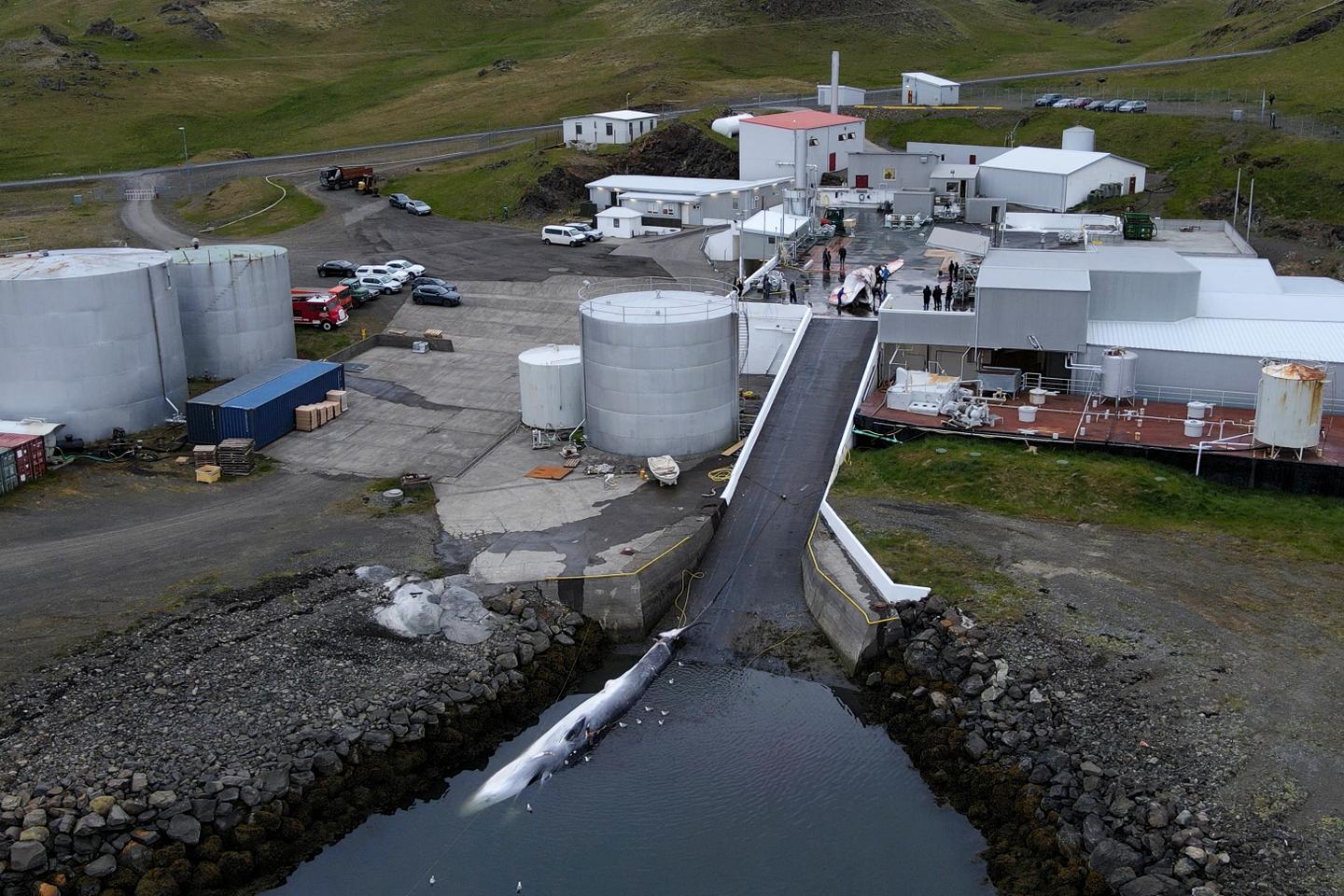
This year, the boats avoided Hvalfjördur, the "whale fjord," north of Reykjavik. At the very end of this inlet stands the whaling station run by Hvalur hf., the last company to practice commercial whaling in Iceland. Since the end of June, the carcasses of more than 50 fin whales, killed by explosive harpoons, have been butchered there.
After a two-year hiatus, the resumption of this highly controversial hunt – practiced by only three countries in the world (Norway, Japan and Iceland) – came as a surprise to Icelanders. It even led some to speculate that Kristjan Loftsson, the very wealthy 83-year-old businessman and head of Hvalur hf., founded in 1947 by his father and a partner, may have resumed hunting in hopes of influencing the outcome of the August 29 referendum on reopening negotiations with the European Union.
You have 76.7% of this article left to read. The rest is for subscribers only.