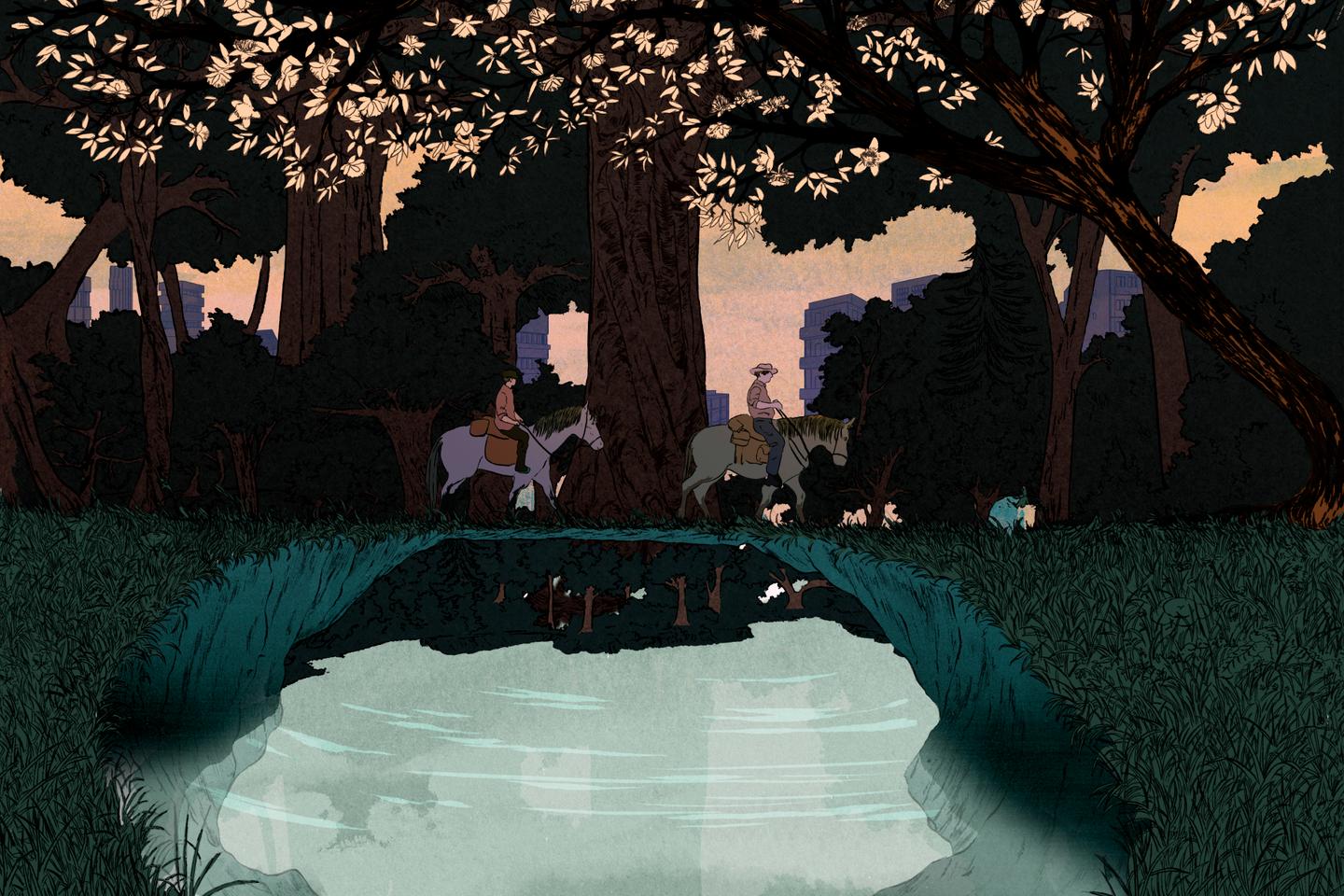
'Room for Hope' (6/6). Anthropologist Charles Stépanoff and essayist Gaspard Koenig have each decided to move to the countryside to work the land, convinced that no one can change the world without first transforming their own.
Lire en françaisSubscribers only
A bit naïve, they followed the advice of Voltaire, the Enlightenment storyteller who urged his contemporaries to "cultivate [their] garden." Charles Stépanoff and Gaspard Koenig took the advice literally, as an ethical imperative in an age of ecological collapse. One is a sought-after anthropologist, director of studies at the School for Advanced Studies in the Social Sciences (EHESS) and recent market gardener. The other is a celebrated novelist, a political troublemaker, a media-savvy essayist who has embraced environmentalism. Both settled in the countryside with their horses to cultivate their respective gardens organically. Digging, hoeing and weeding became ways for them to live in accordance with their beliefs.
Author of Attachements ("Attachments"), a major investigation into how humans, these "empathetic predators," form close bonds with wild species they adopt, Stépanoff opened a farming school at the Domaine de Lignerolles, a former manor house surrounded by 20 hectares in Le Thieulin, in the Loire region. "The issue of food and energy resilience in our ways of life is no longer a luxury, it is a crucial matter that should drive research and experimentation," the specialist in shamanic rituals in Siberia tells the students who come each year to train in agroecology. "You hold the future of the world in your hands."
You have 87.75% of this article left to read. The rest is for subscribers only.