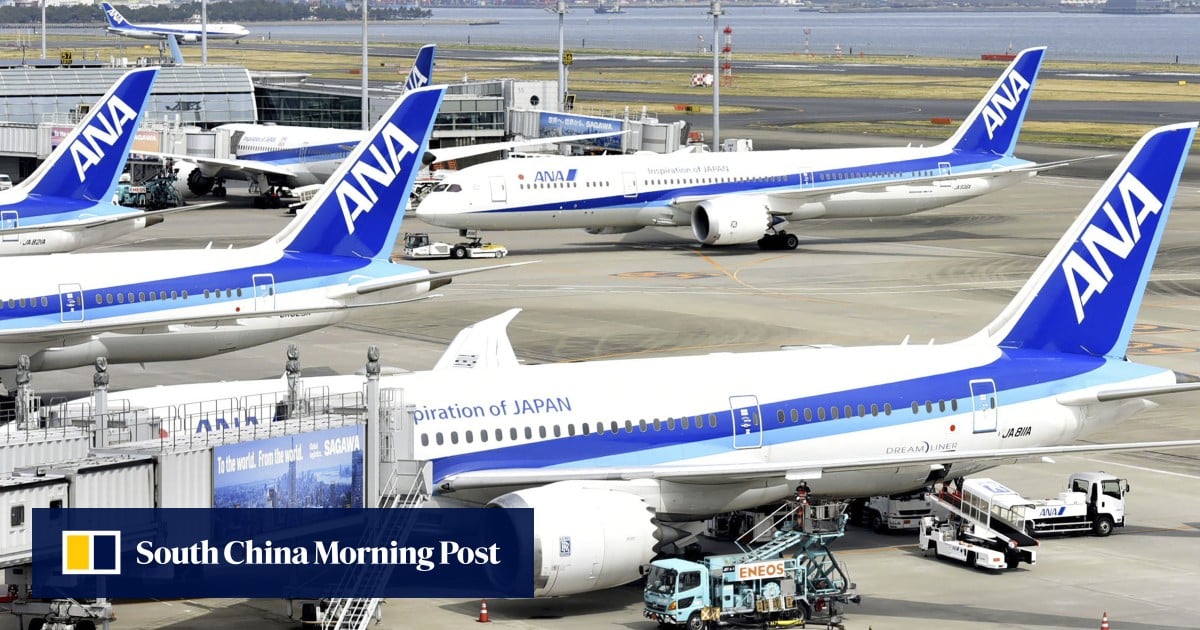
A near-miss on Tuesday involving an All Nippon Airways (ANA) plane coming dangerously close to another jet while approaching Tokyo’s Haneda Airport from Shanghai has thrown aviation safety back into focus – particularly, anti-collision technology and protocols – according to industry professionals based in China.
While the intervention of one jet’s traffic collision avoidance system (TCAS) prevented contact between the two planes, analysts said there were lessons China could learn from the incident, given the other jet’s system failed to provide a similar warning.
They also added China has “stringent” measures and systems in place to make such occurrences “less likely”, since safety would make or break Beijing’s aviation ambitions as well as the future of its home-grown airliners.
ANA Flight NH968, a Boeing 767 carrying 197 passengers and crew members, nearly collided with a Cessna 525C inspector jet from the Japan Civil Aviation Bureau (JCAB). The widebody 767 almost struck the light twin-engined Cessna while descending into Tokyo early Tuesday morning, according to Chinese and Japanese media reports.
Neither ANA nor JCAB immediately responded to requests for comment from the South China Morning Post.
Flight trajectory data indicated that the vertical separation between the two aircraft was merely 20 metres (66 feet) when the jets crossed paths, triggering the ANA plane’s TCAS and prompting the pilot to avert impact with a course correction. No one was injured.