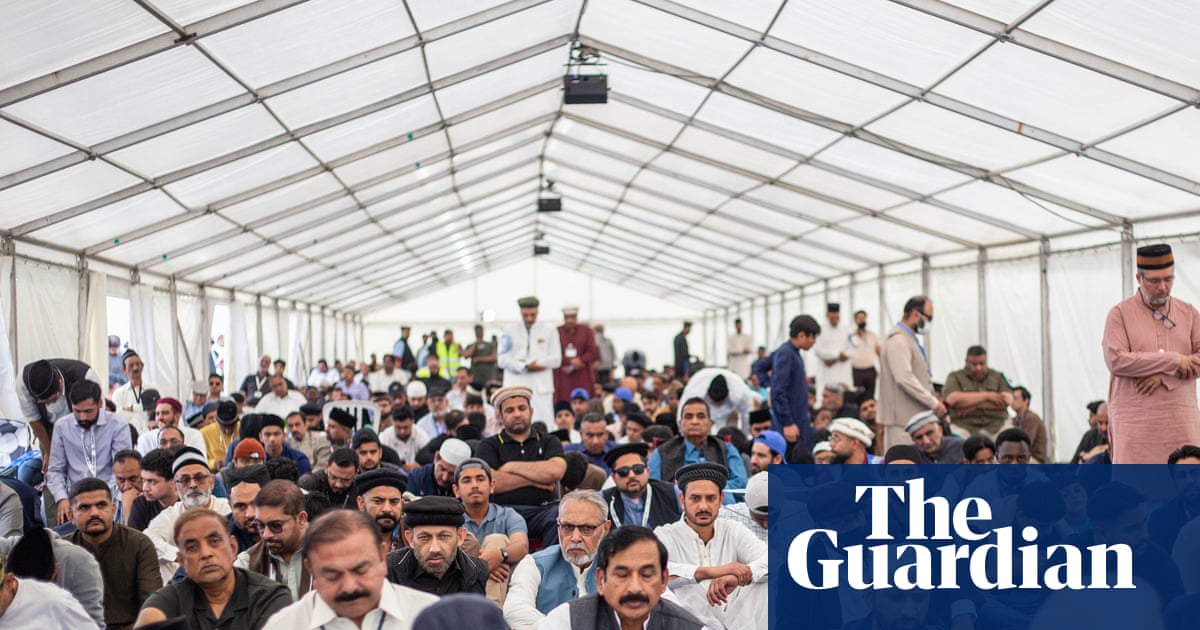
Security has been increased by several hundred additional staff at the UK’s largest Muslim convention, Jalsa Salana, alongside enhanced coordination with police, emergency services and local authorities, against a backdrop of growing anti-Muslim sentiment.
Last month, another big Islamic gathering was forced to close early after 12 people were arrested, including three on suspicion of conspiracy to murder, over a suspected far-right threat.
Did Jalsa Salana’s organisers think twice about going ahead?
“Not once. Not for a second,” said Rafiq Hayat, the head of the UK chapter of the Ahmadiyya Muslim Community, which organises the festival.
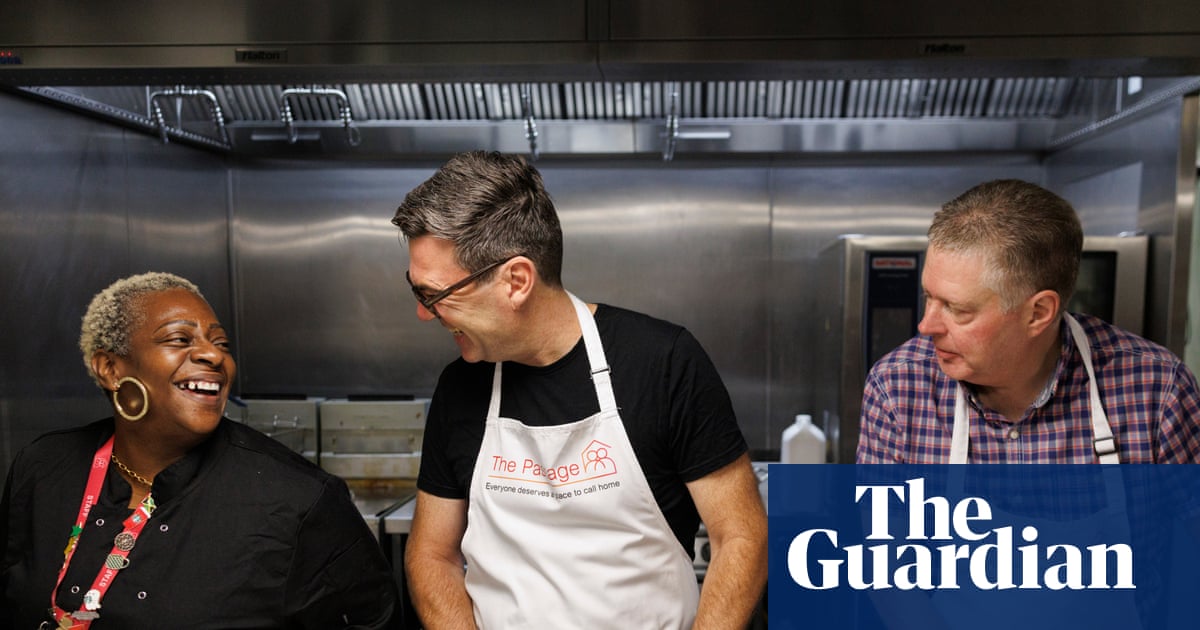
Rafiq Hayat, head of the UK chapter of the Ahmadiyya Muslim Community. Photograph: Andy Hall/The GuardianNow in its 60th year, Jalsa Salana is expected to draw about 50,000 people from more than 100 countries to a temporary site in Hampshire this weekend. The convention opened on Friday with prayers, speeches – including an address from the community’s global leader, Hazrat Mirza Masroor Ahmad – and the raising of a union jack at the centre of the 208-acre site. MPs, bishops and other public figures are expected to attend.
Hayat says the community has weathered hostility before. The Ahmadiyya Muslim Community has been in Britain for more than a century, having established itself in 1913, and built one of London’s first purpose-built mosques in 1926.
“I personally have been in London since 1967, so I have been through all of the various rightwing movements: from skinheads, to the ‘rivers of blood’ speech by Enoch Powell to the British National party. We have seen it all,” Hayat said.
During the construction of the movement’s mosque in Morden in the 1990s, hundreds of British National party supporters protested outside planning meetings, he added.
But rather than withdrawing, Hayat said, the community deliberately invested in relationships with its neighbours.
“We created a liaison group,” Hayat said. “We invited people from the church and from various local groups, from the local authority to the police. And we said we would hold a meeting every month at our mosque, and appointed a local councillor as the chair of the meeting.”
He added that the first two meetings were “very heated”. But, 30 years later, “they will not do anything without us being involved”.
For Hayat, that experience provides a useful lesson to how to respond to this current climate of rising anti-Muslim hatred. Latest figures show that one mosque is attacked in Britain every five days, while anti-Muslim hate crime in England and Wales rose by 19% in the 12 months to March 2025.
“One of the things that the community has been doing over the last 60 years is to bring people of all faith, all backgrounds, all ethnicities, everyone, together,” Hayat said. “The founder of the Ahmadiyya Muslim Community reminded us that true Muslims should embody the teaching of the holy prophet Muhammad – that loyalty to the country in which you live is an integral part of your faith.”
But hostility towards the Ahmadiyya community does not come solely from the far right. Ahmadis have long faced persecution from extremist Muslims, both abroad, particularly in Pakistan and, at times, in Britain.
In 2016, Asad Shah, an Ahmadi Muslim man, was killed outside his shop in Glasgow by another Muslim in a religiously motivated murder.
“The saddest part is that it is sometimes easier to deal with the rightwing than with some Muslim extremists,” Hayat said. “I grew up with lots of Muslims. Some of my closest friends are Muslims who are not Ahmadi. But there are some who have very extreme views.
“But when we have these conferences, lots of Muslims come. When we had the big iftar at our large mosque, about 60% were young Muslims who weren’t Ahmadi.”
Hayat said the community’s answer to threats was not to retreat from public life but to become more visible.
“We say to our children that they must not be embarrassed about being Muslim in this country,” he said. “These misconceptions about Islam have to be dealt with. And this is what I say to the larger Muslim community: please engage with people.”
He didn’t minimise the level of threat facing the Muslim community, pointing to a recent incident in which one of their mosques was attacked, while hatred against Muslims had become increasingly visible online.
Yet, he passionately believes that personal encounters remain the most effective antidote.
Hayat recalled one visitor who admitted she had shared her live location with her husband before visiting the mosque, telling him that if he did not hear from her every 15 minutes, he should come to get her.
Afterwards, she told Hayat she found warmth at the mosque and wanted to return with her family.
“You don’t see my colour any more. You see the human being behind it. This is the key to peaceful coexistence,” Hayat said.