- World World World
- Serbia Serbia Serbia
The former commander of the Serbian army in Bosnia and Herzegovina, who was convicted by an international court for genocide, war crimes and crimes against humanity during the conflicts in the former Yugoslavia in the 1990s and who died in prison in The Hague, was buried in the Serbian capital on Monday.
Lire en françaisSubscribers only
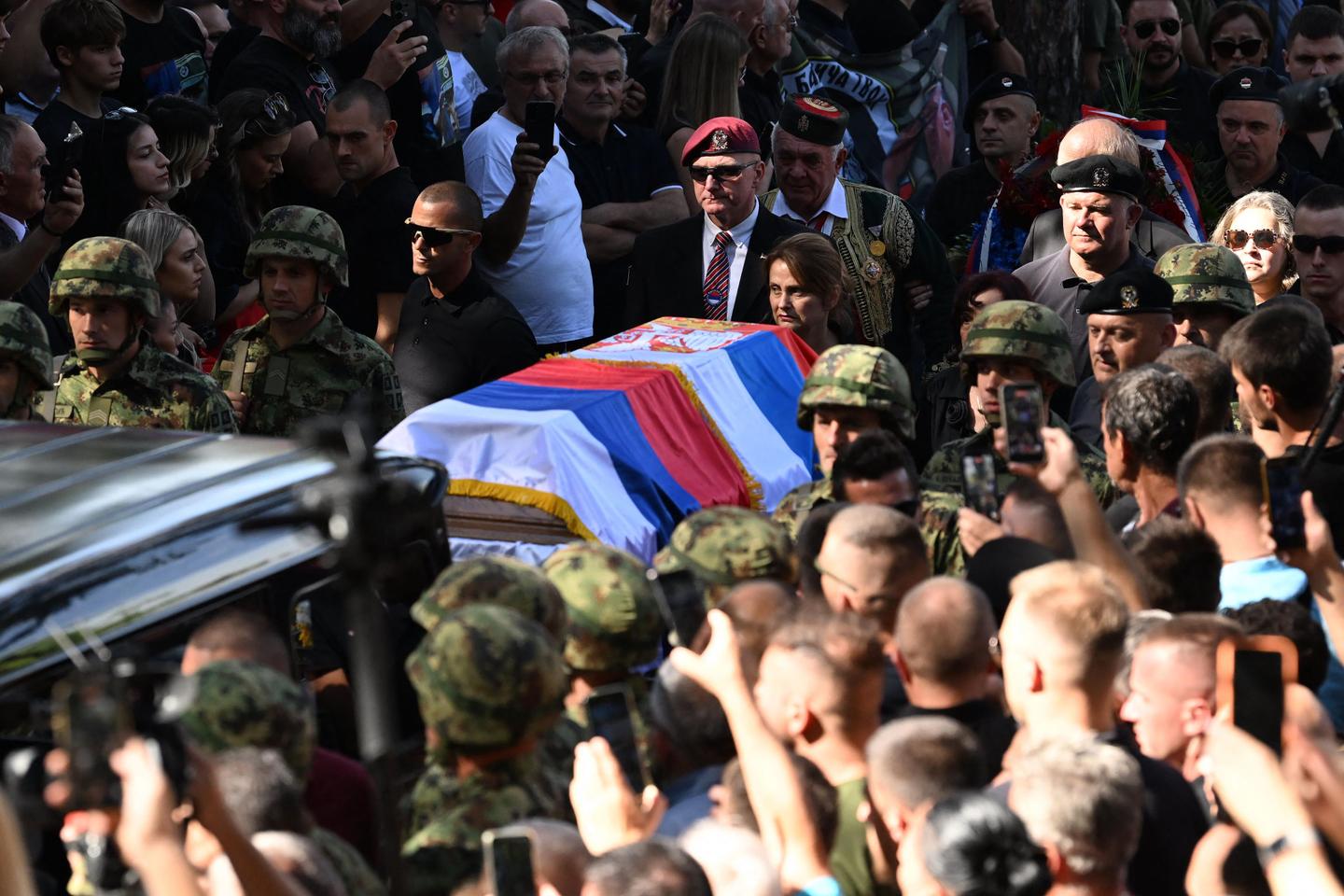
Decades have passed, yet Serbia seemed intent on showing the world that it exists in a parallel reality. For the funeral in Belgrade on Monday, September 7, of General Ratko Mladic, the commander of the Serbian army in Bosnia and Herzegovina, the country witnessed one of the largest fascist and revisionist gatherings since the conflicts that tore apart former Yugoslavia from 1991 to 2001. Mladic was convicted by an international tribunal of genocide, crimes against humanity and war crimes, and he died in a United Nations prison in The Hague on August 27.
From the Church of St. Luke the Apostle to the Topcider Cemetery, thousands of war veterans and ultranationalist groups ranging from hooligans to biker gangs joined the procession. Ordinary people did as well. Some of them were elderly and had memories of Yugoslavia. Others were young Serbs, unwilling to accept the reality of the carnage that happened three decades ago or the overwhelming responsibility of the country and its military leaders.
The welcoming banner set the tone: "Welcome, General, thank your mother for bringing a hero into this world, so that the glory of Greater Serbia might return." Greater Serbia, once again. The term refers to the project aiming to build an ethnically pure state on the ruins of Yugoslavia.
You have 83.41% of this article left to read. The rest is for subscribers only.