Coastal communities around the world face a growing flood threat from two directions. Ocean levels are increasing, while in many densely populated regions, the ground itself is also sinking.
Researchers from the Technical University of Munich (TUM) and Tulane University found that this downward movement of land is greatly increasing the amount of sea level rise experienced by millions of coastal residents.
Coastal Residents Face Faster Sea Level Rise
More than half a billion people live in low-lying coastal zones, placing them on the front lines of one of climate change's most serious challenges.
A team from the German Geodetic Research Institute at TUM (DGFI-TUM) and Tulane University in New Orleans reports in Nature Communications that people living in heavily populated coastal regions experience an average relative sea level rise of about 6 millimeters per year.
That rate is nearly three times the coastline-weighted global average of 2.1 millimeters per year, which represents the mean relative increase recorded along coastlines worldwide. It is also almost twice the climate-driven absolute sea level rise of approximately 3.15 millimeters per year.
The main reason for the difference is land subsidence, the gradual sinking of the ground beneath coastal cities and communities.
What Causes Coastal Land to Sink
The precise cause of subsidence is not always easy to determine because several forces can operate at the same time.
Among the most important contributors are heavy groundwater pumping, oil and gas extraction, the compression of relatively young sediments in river deltas, and the weight of expanding urban areas. Natural processes also contribute, including tectonic movement and adjustments in the Earth's crust following the loss of ancient ice sheets.
"If we want to understand sea-level rise along coastlines and respond effectively, we must not only observe the ocean but also the land itself. Especially in densely populated coastal regions, human activities cause the land to subside more strongly - often due to excessive extraction of water and resources that previously stabilized the subsurface. The sheer weight of cities, along with long-term geological processes, can further intensify this subsidence. In doing so, we significantly amplify the effects of climate-driven sea-level rise," says Dr. Julius Oelsmann, lead author of the study and researcher at DGFI-TUM.
Some Cities Are Sinking Extremely Fast
Thailand, Bangladesh, Nigeria, Egypt, China, and Indonesia are among the countries experiencing the highest relative sea level rise. Their population-weighted coastal averages range from roughly 7 to 10 millimeters per year.
The United States, the Netherlands, and Italy also have elevated rates, averaging approximately 4 to 5 millimeters per year.
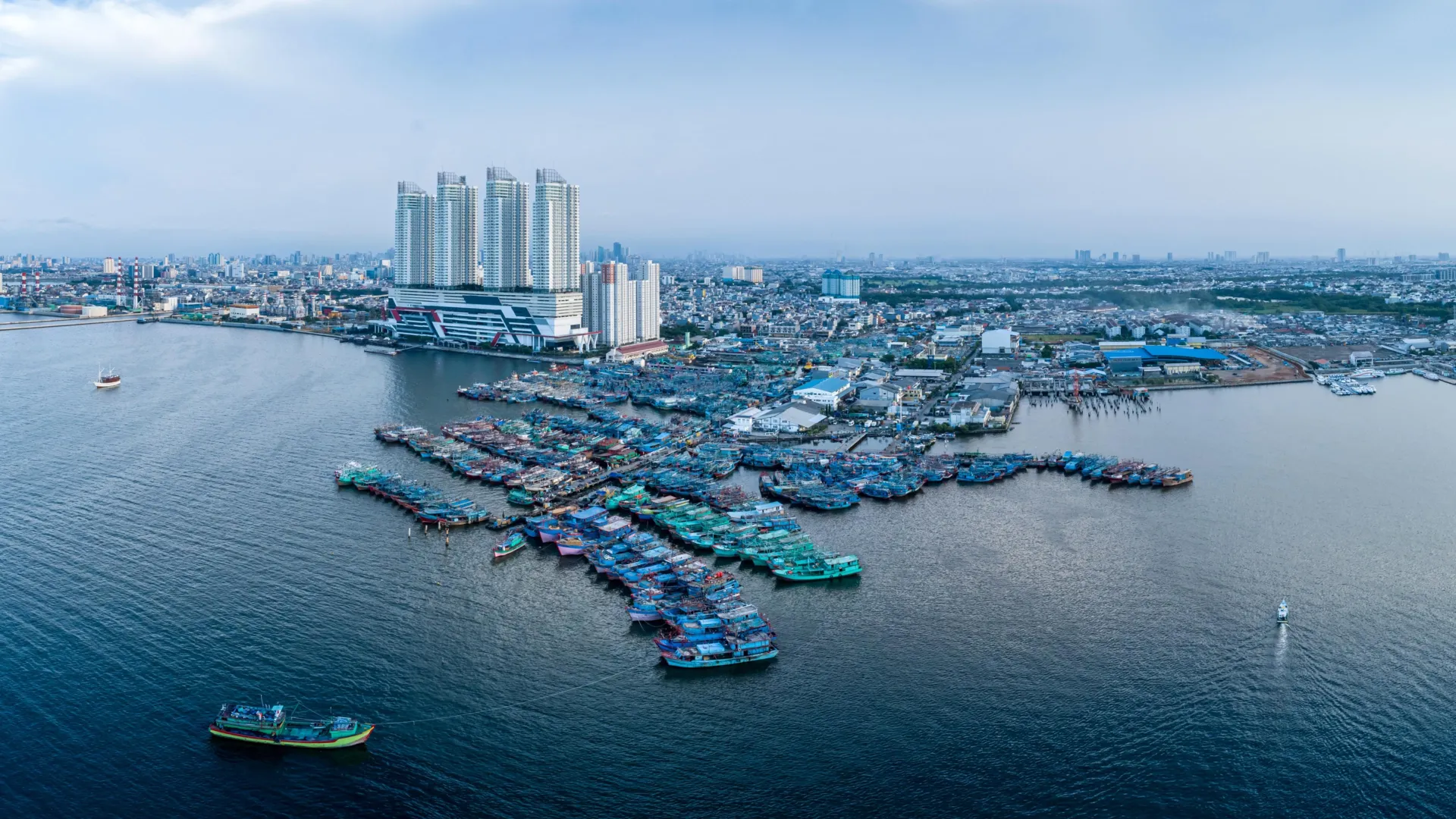
Several major coastal cities stand out as subsidence hot spots. Average sinking rates include Jakarta (13.7 mm/year), Tianjin (13.5 mm/year), Bangkok (8.5 mm/year), Lagos (6.7 mm/year), and Alexandria (4 mm/year).
Conditions can differ sharply even within the same city. In Jakarta, some locations are sinking by as much as 42 millimeters per year, while other sections are rising at the same time.
Rising Land Can Offset Sea Level Changes
Not every coastline is moving downward. In Sweden and Finland, geological uplift is producing a relative decline in sea level along parts of the coast.
The land in these regions is still rising because of postglacial rebound following the last Ice Age - and the uplift is occurring faster than the sea is rising.
Groundwater Policies Can Slow Subsidence
Although some causes of sinking land are natural, groundwater use is one factor that governments and communities can directly influence.
"In many large coastal cities, groundwater extraction is a major driver of land subsidence. This means that local political and water-management decisions can make a significant difference. Improved groundwater management, stricter regulation of withdrawals, or targeted recharge of aquifers can at least slow subsidence rates and, in some cases, largely halt them," says Florian Seitz, Professor of Geodetic Geodynamics and Director of the German Geodetic Research Institute at TUM (DGFI-TUM).
Tokyo offers a prominent example of how regulation can reduce the problem. The city once experienced subsidence exceeding 10 centimeters per year, with the worst affected locations sinking by around 24 centimeters annually.
Government action and the development of alternative water supplies eventually brought those rates down substantially.
A similar response took place in the Harris-Galveston region of Texas, where extensive groundwater withdrawal had become the primary cause of sinking land. Officials created the Harris-Galveston Subsidence District in 1975 to regulate groundwater use, encourage alternative water sources, and promote water conservation.