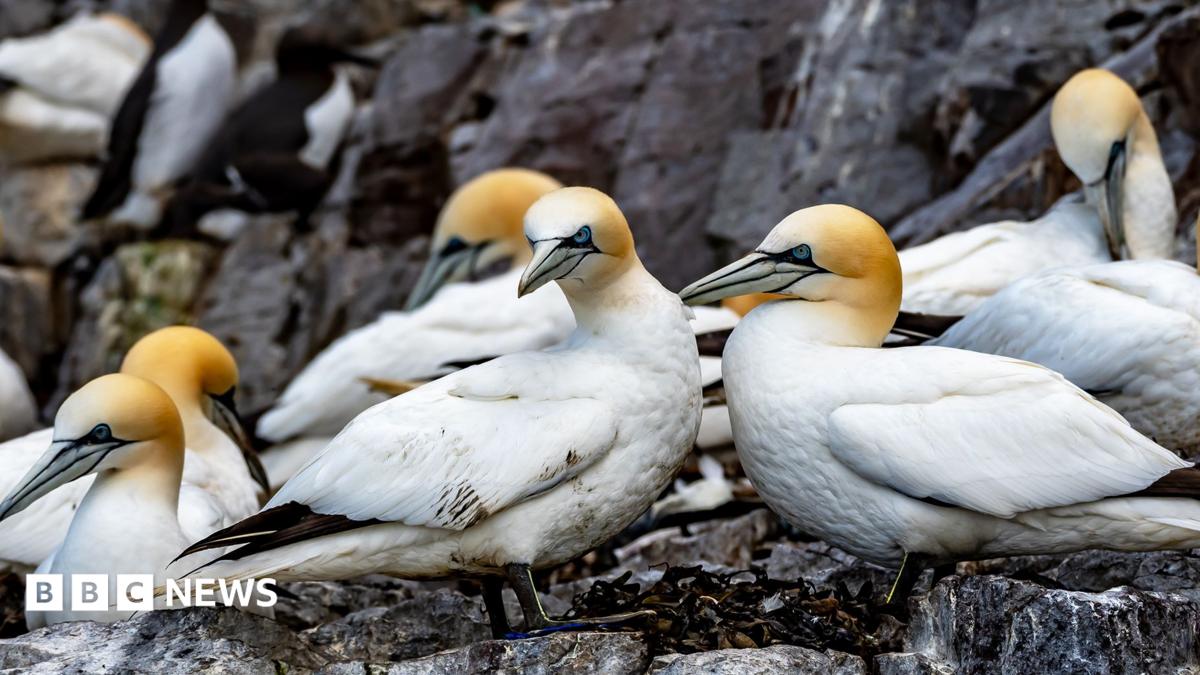
Devon Docherty, Scottish campaigns manager at Protect the Wild, said refusing a licence was a "victory for compassion, for science and for common sense".
She added: "Thousands of young seabirds have been spared from a brutal death because NatureScot chose to follow the evidence rather than simply rubber-stamp another licence to kill."
Scottish animal campaigns charity, OneKind, also welcomed the decision.
Chief executive Jason Rose said: "We are very relieved that the lives thousands of young gannets will be spared this year, and many more birds won't bear the emotional toll of disruption to their lives, families and communities."
The Scottish Seabird Centre, said it was the "right decision" for Scotland's seabirds.
Emily Burton, conservation manager, said: "Gannet populations have suffered significant declines, and many colonies are still recovering from the impacts of avian influenza."
More than 106,000 people signed a petition, external calling for the Scottish government to prohibit the hunt.
The cultural significance of the hunt is recognised under the Wildlife and Countryside Act 1981, and modern hunts require a licence from NatureScot.
Agnes Rennie, is chair of Urras Oighreachd Ghabhsainn, the local community land group for the north of Lewis. She said: "The guga hunt is a centuries-old tradition which reinforces our unique communal identity and helps families keep ancient Gaelic customs alive and relevant in the modern world."
Historian Donald S Murray said food security was not guaranteed, and argued that the hunt was not unique.
He said that in New Zealand sooty shearwater, also known as muttonbirds, were traditionally hunted on Rakiura, which is also known as Stewart Island.
Murray described the campaign against the guga hunt as "monstrous".
Anti-guga hunt graffiti was sprayed on walls at NatureScot's headquarters in Inverness in February, and was followed by a rooftop protest in March.
Murdo MacRitchie, of the Save Our Guga Harvest group, said there was "deep disappointment" in Ness following the decision.
He added: "However, that decision has to be respected and we will continue to work with NatureScot to help us fully understand the scientific grounds on which it was based.
"It should be noted that NatureScot addressed the issue of welfare and, having taken advice from Scotland's chief veterinary officer, again confirmed the method of dispatch is humane."
Torcuil Crichton, Labour MP for Na h-Eileanan an Iar, has submitted a Freedom of Information (FOI) request to find out how NatureScot came to its conclusion.
"Last year, when the Men of Ness took 500 guga from Sula Sgeir the science backed them up and the recommendation was for the hunt to go ahead," he said.
"The numbers haven't changed, the situation hasn't changed but the way of measuring the numbers has changed."
He said objectors had won a "hollow victory" stopping this year's hunt.