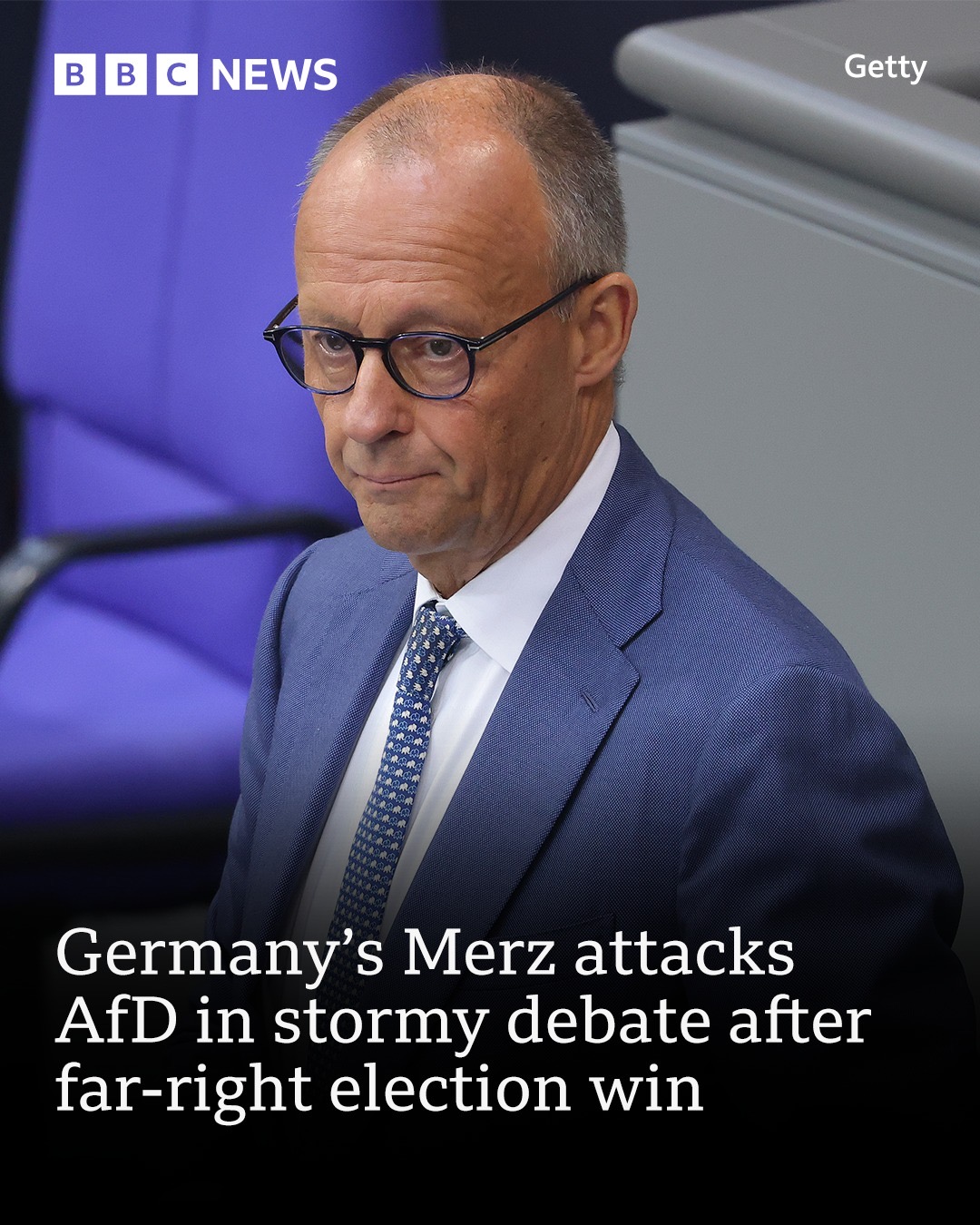
The clash came after the far-right Alternative for Germany (AfD) secured a major electoral victory in Germany’s eastern state of Saxony-Anhalt. Weidel used the parliamentary debate to attack Merz’s government and argue that German voters were demanding a major political change.
Merz pushed back strongly, particularly over the AfD’s use of the term “remigration” and its proposals for tougher immigration policies. He argued that implementing such policies on a large scale could amount to what he described as “ethnic cleansing based on origin and skin colour.”
The chancellor also warned that forcing large numbers of foreign workers to leave Germany could create serious shortages in essential sectors, including healthcare, nursing homes and restaurants, which rely heavily on migrant workers.
Weidel and other AfD politicians rejected Merz’s characterization, arguing that their proposed deportations would target people without a legal right to remain in Germany and would be carried out according to German law.
The confrontation highlights the growing political divide in Germany over immigration, deportation, integration and the country’s relationship with the AfD, particularly after the party’s strong performance in Saxony-Anhalt.