- Magazine Magazine
- Culture Culture Culture
By Clément Ghys
Published on August 16, 2026, at 5:00 am (Paris), updated on August 17, 2026, at 10:45 amSubscribers only
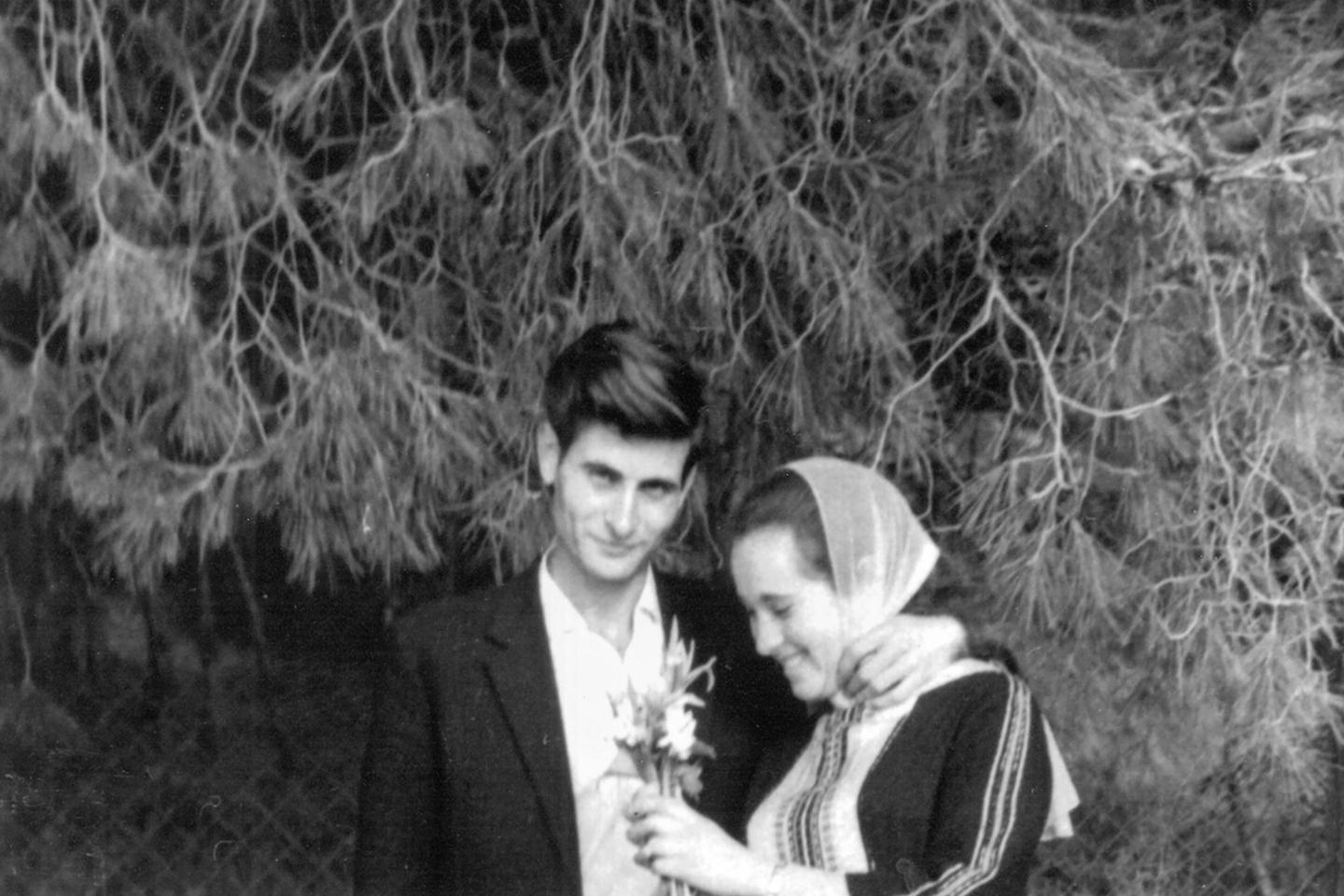
Long ReadIn the early 1960s, in Haifa, Israel, the young Palestinian poet Mahmoud Darwish fell in love with Tamar Ben Ami, a Jewish Israeli dancer. Their romance was intense but brief. From this forbidden love, the writer composed a poignant poem, 'Rita and the Rifle,' which is still sung throughout the Arab world.
"Between Rita and my eyes/There is a rifle/And whoever knows Rita/Kneels and prays/To the divinity in those honey-colored eyes." Who in the Arab world has not hummed these words? Who, from Cairo to Amman, from Damascus to Beirut, has not joined their voice to that of the gentle Lebanese singer Marcel Khalifé, who, since the 1970s, has performed the piece "Rita wa al-Bunduqiya" ("Rita and the Rifle") around the world, accompanied by an oud, percussion and cellos? Who has not been moved by this sorrowful memory of a beloved woman? "And I was lost in Rita for two years/And for two years, she slept on my arm (...)/ Between us there are a million sparrows and images/And many a rendez-vous fired at by a rifle."
Rita is the heroine of a popular song, like the Beatles' "Michelle" or Serge Gainsbourg's "Elisa." But above all, she is the heroine of a ghazal – the name given to the great love poems that have illuminated Arabic literature since the Middle Ages. A modern ghazal, "Rita and the Rifle" has been part of the Arab world's imagination ever since Palestinian poet Mahmoud Darwish (1941-2008) wrote it in 1967.
"Whichever Arab country you visit, everyone knows this poem," said Mathias Enard with a smile. Enard, a prominent expert on the Middle East and the winner of the Prix Goncourt in 2015 for the novel Compass, said he was "impressed by the power of the image of the rifle coming between two lovers and by the novelistic strength of the text." That force could be felt in the interpretation by Khalifé, but also in the recordings of the moving recitals that Darwish gave across the Arab world, where, according to Palestinian historian Elias Sanbar, "poetry is not limited to literary salons but is known by the popular classes." Sanbar, who was both a friend and translator of Darwish, recalled stadiums where tens of thousands of people came to listen to the poet, audiences climbing trees in Sudan to catch a glimpse of him and security guards trying to contain the crowds in Algeria.
You have 90.34% of this article left to read. The rest is for subscribers only.