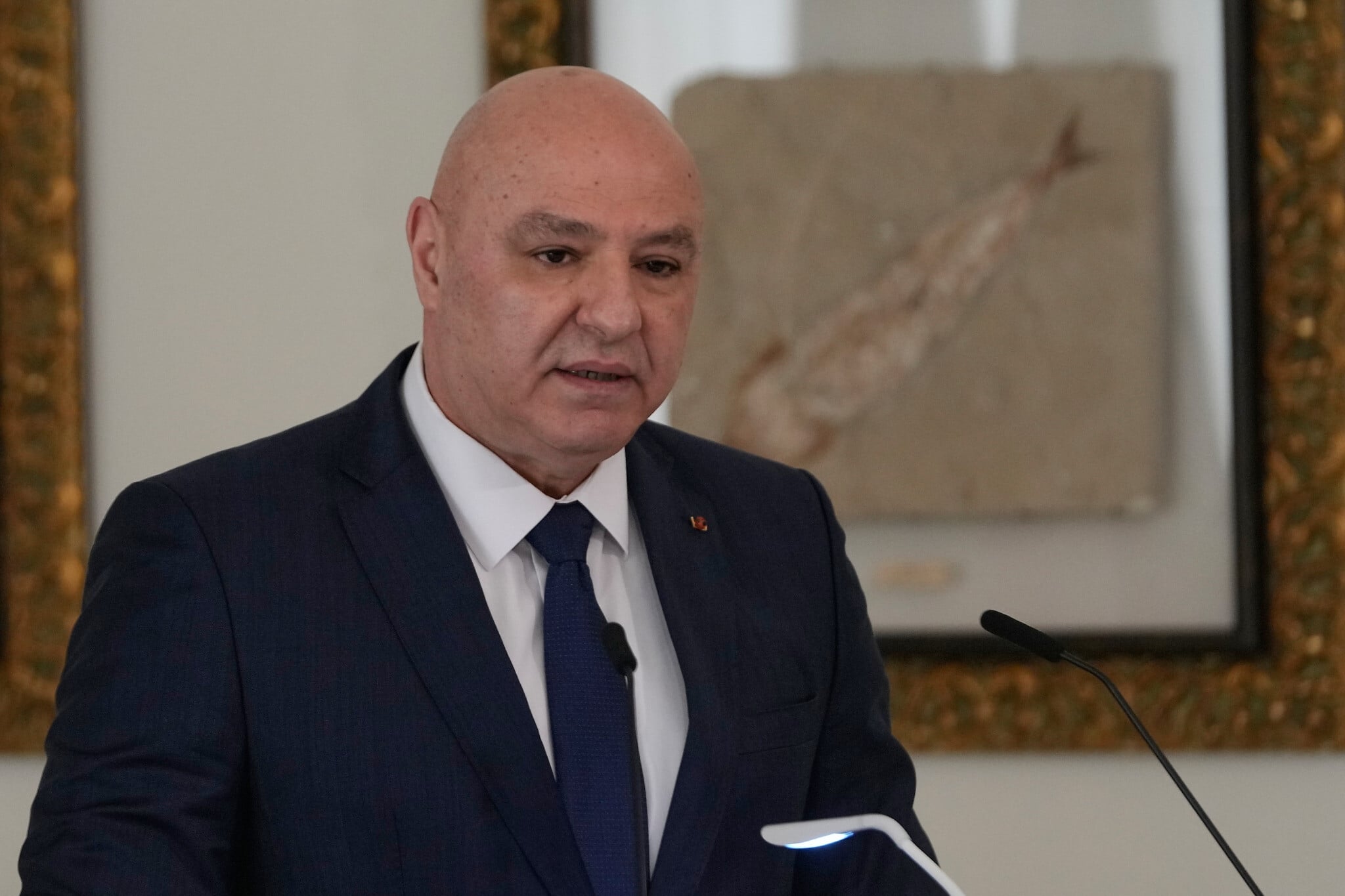
Lebanese President Joseph Aoun left Beirut on Saturday for Washington, where he is expected to meet Donald Trump, his office said, after the latest round of Lebanon-Israel talks wrapped up in Italy.
It will be the first trip to Washington by a Lebanese head of state since Michel Sleiman was received by Barack Obama in 2009.
Aoun will hold discussions “with several American officials on the situation in Lebanon and ways to strengthen the ceasefire,” particularly in the south, as well as on “the withdrawal of Israel from the Lebanese regions it occupies,” the presidency said.
Israel and Lebanon — which do not have formal diplomatic relations — began US-sponsored negotiations in April aimed at reaching a peace deal and permanently ending the Israel-Hezbollah war.
On June 26, they reached a framework agreement in Washington under which the Israeli military is to withdraw from southern Lebanon and the Lebanese army is to deploy, starting with two “pilot zones.”
Get The Times of Israel's Daily Edition by email and never miss our top stories
By signing up, you agree to the terms
The agreement is contingent on the disarmament of Iran-backed terror group Hezbollah, which has flatly rejected the deal and the Israel-Lebanon negotiations.
Following the latest round of talks this week in Rome, Israel and Lebanon “agreed on the structure and guidelines” for implementing the pilot zones, a US official said.
A Lebanese military source told AFP that the army had begun intensifying patrols in several villages adjacent to areas held by Israeli forces, including Froun in the Bint Jbeil district, in preparation for implementing the pilot zones provision.
The caskets of Hezbollah fighters killed during clashes with the Israeli army are pictured to the right and left of a mock coffin of Iran’s slain supreme leader, Ayatollah Ali Khamenei during a mass funeral in the southern Lebanese village of Majdel Selm on July 18, 2026 (Ibrahim AMRO/AFP)Hezbollah held a rally in the coastal city of Tyre on Saturday to reiterate its rejection of the plan.
Hezbollah pulled Lebanon into the Middle East war on March 2, when it began striking Israel in support of its backer, Tehran.
Israel responded with airstrikes and a ground invasion, and despite a ceasefire, it continues sporadic attacks and holds territory in the south in what it describes as a security zone.
On Saturday, Lebanon’s state-run National News Agency reported fresh airstrikes against two towns located on the edge of the security zone, in the Tyre and Nabatieh regions, and a large detonation near the town of Zawtar al-Sharqiyah.
The Lebanese military said that a soldier was killed, and an officer and another soldier were wounded, “as a result of the explosion of a suspicious object in an army vehicle” in Mansouri, which was also subjected to several Israeli strikes.
However, the Israeli army said that the explosive device had been planted by Hezbollah.
Following an examination, “it was determined that the explosive device was not an IDF device, but rather one that was apparently planted by the Hezbollah terror organization,” it said, adding that Israeli troops had not been present in Mansouri recently, despite it being located within the IDF’s security zone.
Lebanese soldiers inspect the site of an explosion that targeted their vehicle in the southern Lebanese area of al Mansouri, near Tyre, on July 18, 2026. (Kawnat Haju/AFP)The Lebanese army vehicle had entered the security zone without prior coordination with the IDF as required, the military said.
The IDF said it was calling on Lebanese civilians and forces “to avoid entering locations where Hezbollah continues to pose a threat, and to coordinate movements in advance as customary, for their own safety.”
The IDF said separately that it had struck and killed a cell of Hezbollah operatives piloting a drone over an area of southern Lebanon where Israeli troops are operating.
The IDF said troops of the Commando Brigade spotted an enemy drone over Kfar Tebnit earlier Saturday. The Israeli Air Force then launched searches in the area and identified several Hezbollah operatives who were operating the drone while hiding near the security zone.
The IAF then struck and killed the Hezbollah operatives “to remove the threat to our forces,” the army said.
The US embassy, meanwhile, renewed its call for Americans not to travel to Lebanon, citing “high tensions in the Middle East.”
US-brokered talks between Israel and Lebanon were held in Rome this week, without an exact timeline for when Israel will fulfill its pledge to withdraw from the two pilot zones, though officials described the dialogue as “positive.”
According to Lebanon’s Al Jadeed TV channel, Israeli and Lebanese officials discussed during their meeting on Wednesday how to verify that pilot zones under Lebanese army control are free of Hezbollah weapons and fighters.
A third party will verify disarmament, according to the report. No final decision has been reached, though United Nations forces have been brought up as a possibility.
Lebanese army soldiers inspect the site of an explosion that targeted their vehicle in the southern Lebanese area of al Mansouri near Tyre on July 18, 2026 (Kawnat HAJU/AFP)Lebanon is pushing to start the implementation of the pilot project “as soon as possible,” within a week at the very latest, the Lebanese sources said.
The first pilot zone will include the villages Zatar El-Gharbiyeh, Zatar El-Sharqiya, Ghandouriyeh, Froun, Srifa, and Burj Qalaouiyah, which sit on both the northern and southern banks of the Litani River.
Israel agreed to withdraw from two pilot zones as part of the framework deal inked with Lebanon three weeks ago. Jerusalem described the withdrawals as a very minor concession, given that the pilot zones are located in areas beyond the original buffer zone that the IDF had established in southern Lebanon.
IDF officials have said that while they are ready to implement the withdrawal, they have yet to receive a directive from the political leadership. Lebanese officials previously accused Israel of dragging its feet and threatened not to attend the talks in Rome this week.
However, the US convinced Beirut to back down from the threat, pledging progress on the Israeli withdrawals.
An Israeli official also called this week’s talks “positive,” saying that they “further reinforced that Israel and Lebanon are in agreement on the need to dismantle and disarm Hezbollah and to continue in the process to implement the trilateral framework agreement.”
The State Department spokesperson said that the sides will “now move to expanded technical talks, which will focus on implementing all areas of the trilateral framework with the aim of reaching a comprehensive agreement between Israel and Lebanon.”
Emanuel Fabian, Jacob Magid and Lazar Berman contributed to this report.


