Updated Jul 17, 2026, 10:18 a.m. Published Jul 17, 2026, 5:32 a.m.
3 min read
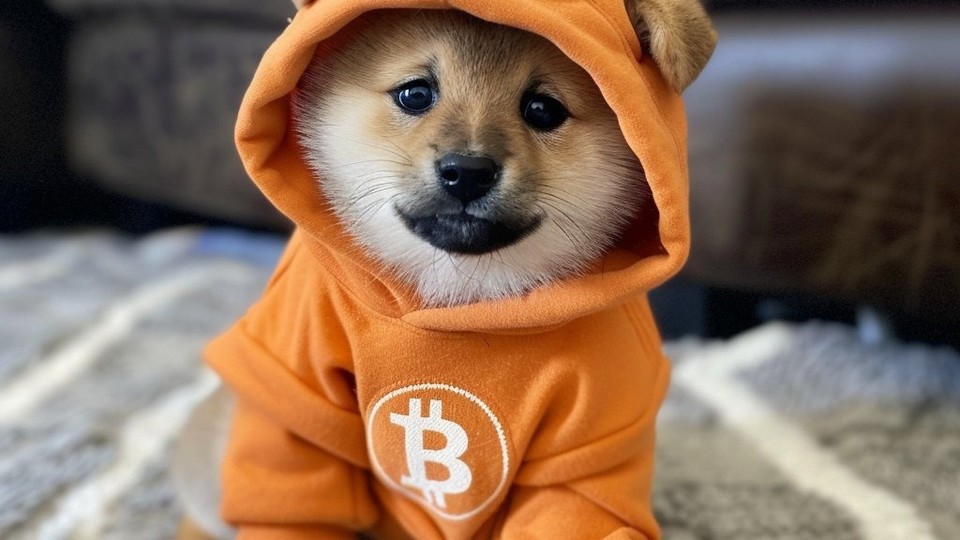
Leonidas's DOG•GO•TO•THE•MOON token secured a coveted satoshi during the fourth Bitcoin halving. (DOG•GO•TO•THE•MOON)Summary
- A leading Ordinals and Runes advocate, Leonidas, has proposed a new open-source Bitcoin client called DOG Mode that would bypass the stalled BIP-110 process to restrict non-financial data.
- DOG Mode would relax Bitcoin Core’s relay policies by allowing near–block-size transactions and cutting the dust limit to one satoshi, changes that could free an estimated $25 million in “padding” used by Ordinals and Runes.
- Unlike BIP-110, which would change consensus rules and has virtually no miner support, DOG Mode only alters what nodes forward and could work with just one miner including such transactions, though it currently exists only as an announced initiative without code.
Five days after CoinDesk reported that a proposal to purge non-financial data from Bitcoin was approaching deadline with effectively zero miner backing, some developers in the community have a different plan that skips the vote entirely.
Leonidas, co-founder of the Runestone project and one of the most prominent figures in Bitcoin's Ordinals and Runes ecosystem, said he is starting an open source Bitcoin client called DOG Mode.
DOG Mode would lift two of the limits set by Bitcoin Core, the software that runs on the large majority of Bitcoin's nodes. One caps the largest transaction a node will pass along to its peers, while the other sets the smallest amount of bitcoin an output can hold.
Consensus rules define what makes a block valid, and breaking them splits a node off the network. Relay policy is separate and softer, as it governs what an individual node chooses to forward to its neighbours, and Core's version rejects transactions it deems "non-standard" even when they are perfectly valid under consensus.
Because almost every node runs Core, those defaults function as Bitcoin's rules in practice. A miner who receives such a transaction directly can still mine it, and the block stands. Core won't relay these transactions so processing one requires going through a miner directly. Services like MARA’s Slipstream exist to handle large, complex transactions.
On the other hand, DOG Mode would raise the maximum standard transaction from 400,000 weight units to 3.9 million. A Bitcoin block holds four million weight units - the metric used to measure the data size of a transaction - so Core currently relays nothing larger than a tenth of a block, while DOG Mode would carry transactions filling nearly all of one.
It would also cut the dust limit, the floor below which an output is considered too small to bother relaying, from between 294 and 546 satoshis to a single satoshi. A satoshi is the smallest unit of bitcoin, equal to one hundred millionth of BTC.
Ordinals, which embed images and text directly into transactions, and Runes, which issues tradeable tokens on Bitcoin, both have to pad their outputs with extra bitcoin to clear that floor. Leonidas claims removing it would release about $25 million in padding back to those ecosystems.
BIP-110, the proposal to cap arbitrary data, is a user-activated soft fork needing 55% of miners to signal support. It has drawn zero in the current period and has never cleared roughly 1% in any period, according to the BIP-110 monitor. It rewrites the rulebook, requiring the network’s permission, which is not forthcoming.
DOG Mode doesn’t need that same permission. It changes what one node forwards. If enough nodes run it and any miner takes the fees, the transactions confirm. There is no threshold, no signaling window, no deadline.
BIP-110's node support sits in the low single digits and is carried almost entirely by Bitcoin Knots, the long-running alternative to Core favoured by the restrict-data camp. DOG Mode would be the mirror image, a Core fork for the other side, and Leonidas is explicit that it would deviate from Core far less than Knots does.
As such, DOG Mode does not have is code. Leonidas asked developers to contribute to an initial release, miners to add support, and users to quote-post a slogan. There is no repository, no version, no benchmark as of Friday.
Leonidas was a champion of the Runes protocol and co-founded Runestone, the project that seeded the DOG token. He is now proposing a Bitcoin client and asking someone else to build it, and the dust change he wants would release money directly back into the markets where his own token trades.
BIP-110 would rewrite the rulebook and needs a supermajority of miners it does not have. DOG Mode, however, would only change what a single node forwards and would require a single miner willing to accept a fee. Only one of them requires anyone's consent.
DOG prices were little-changed after the Friday posts, down 1.2% in the past 24 hours.
- 1
- 2
- 3
- 4
- 5
- 6
- 7
- 8
- 9
- 10


