Updated Aug 4, 2026, 6:21 p.m. Published Aug 4, 2026, 2:00 p.m.
4 min read
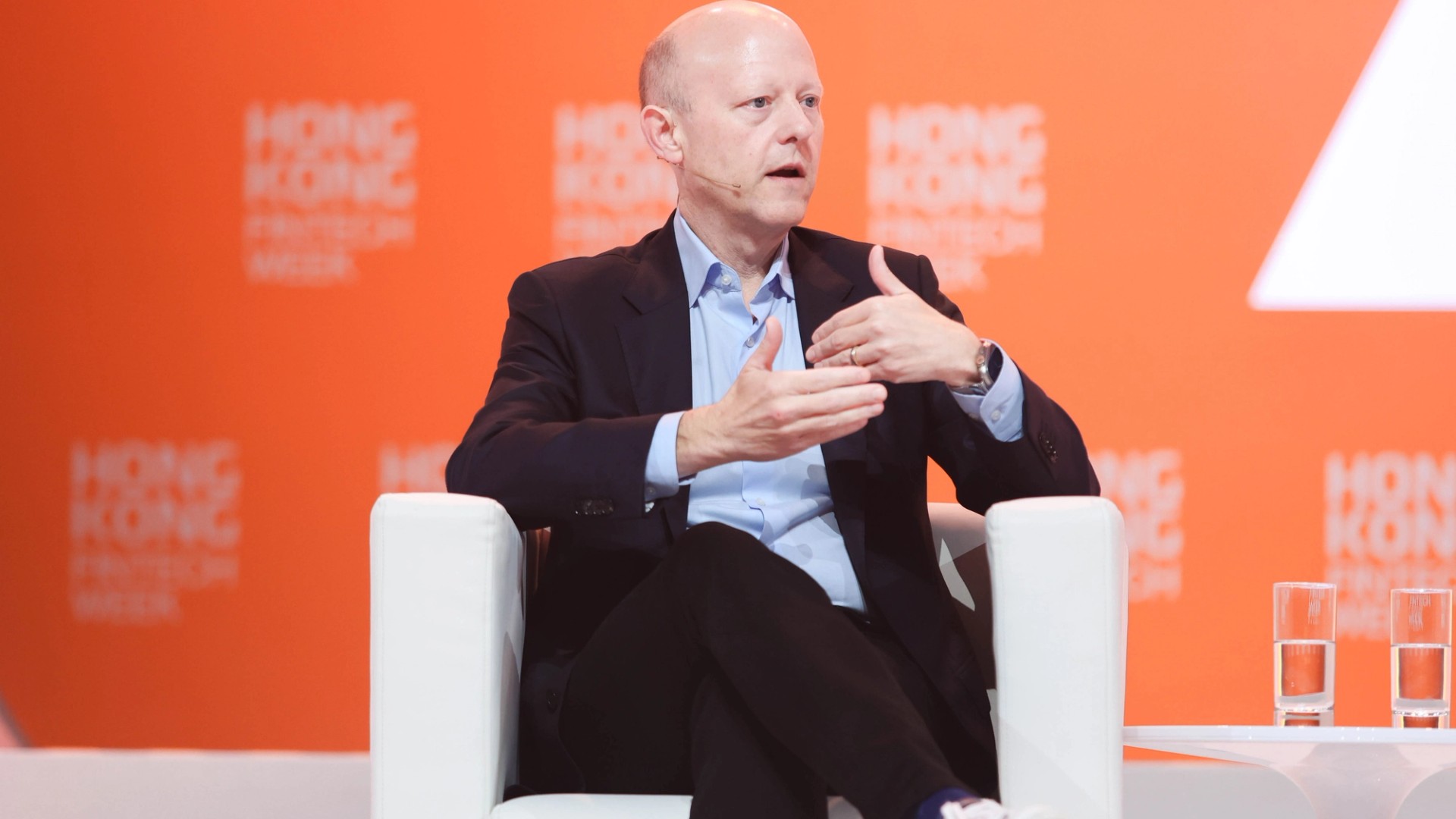
Dinari co-founder and CEO Gabe Otte (Dinari)Summary
- Dinari is expanding its tokenized U.S. equities platform to eligible U.S. investors through self-custody crypto wallets.
- The launch follows Ondo Finance's unveiling of an SEC-aligned framework for tokenized stocks and reflects growing competition in the sector.
- The tokenized equity market is emerging as the next frontier for real-world assets after the rapid growth of tokenized Treasury funds.
Tokenized equities firm Dinari is bringing its blockchain-based U.S. stock offering to eligible domestic investors, expanding its tokenization model into the U.S. market after working through the regulatory plumbing needed to let investors buy shares with stablecoins.
The company said Tuesday that investors can buy and sell 724 tokenized U.S. stocks, including every company in the S&P 500, using Circle's USDC stablecoin through self-custody wallets. Dinari’s stock tokens, dubbed dShares, are available on Ethereum, Arbitrum, Base and Avalanche blockchains, with support for Solana and Sei coming “soon,” the firm said.
The offering runs through Dinari's regulated broker-dealer and transfer agent infrastructure and launches with partners including Circle (CRCL), Stripe-owned Privy, Para and Monaco.
The move comes as tokenized equities emerge as the next battleground in real-world assets. After tokenized U.S. Treasury funds became the first major institutional use case, firms are increasingly turning to public equities, betting blockchain technology can modernize trading, settlement and shareholder recordkeeping. Citi projects tokenized securities could grow into a $5.5 trillion market by 2030.
Tokenized stocks market (RWA.xyz)Dinari, based in San Mateo, California and led by Gabe Otte, a former Apple engineer and CEO of biotech startup Freenome, aims to offer infrastructure for fintechs, wallets and broker-dealers to offer tokenized shares to their own customers, rather building a large retail brokerage than becoming. It remains one of the smaller players in the sector, with about $10 million in tokenized stocks in a $2.2 billion market, according to RWA.xyz.
The company raised over $22 million from investors, including Hack VC, Blockchange Ventures, VanEck Ventures, F-Prime and Blizzard, the Avalanche ecosystem fund.
Competing visions to tokenize stocks
The race is also turning into a debate between competing models of bringing equities onchain.
The U.S. Securities and Exchange Commission (SEC) outlined in a January staff statement three different structures: issuer-sponsored securities created with the involvement of the public company, along with third-party models that either hold the underlying shares in custody or provide synthetic exposure to them.
Robinhood (HOOD) and Kraken parent Payward have expanded synthetic, offshore offerings that mirror publicly traded shares but are not available to U.S. investors. Ondo Finance ONDO$0.3745 also uses a synthetic model, but recently it unveiled a framework to offer tokenized stocks through its SEC-registered transfer agent, though those products are not yet available to U.S. investors.
Firms like Securitize (SECZ) and Figure have pushed an issuer-sponsored model, in which companies issue shares directly onchain, and have listed a blockchain-based version of their own equity alongside their New York Stock Exchange debuts.
Dinari is betting on the third-party custodial model described in the SEC staff statement. Its dShares are backed one-for-one by ordinary stocks and exchange-traded funds held in regulated brokerage accounts. The tokens reflect dividends, voting rights, stock splits and other corporate actions, while investors can hold them in self-custody wallets and use USDC to buy and sell them.
“The idea for Dinari has always been: Let’s operate within NMS, but let’s offer it in tokenized form,” CEO Gabe Otte told CoinDesk in an interview.
Regulation NMS is the body of rules governing U.S. stock markets, not a separate tokenization license. Otte’s argument is that Dinari keeps the underlying shares within the existing market structure and its investor protections, rather than creating a separate class of securities outside it.
Regulatory setup
Last year, Dinari became the first tokenized-stock provider to obtain a U.S. broker-dealer registration through its subsidiary, giving it the regulated entity needed to serve American investors.
Otte said the firm then spent roughly a year working with regulators on how an investor could send USDC from a self-custody wallet, fund a brokerage account held in that investor’s name, and receive a token that is matched to the underlying stock.
FINRA had not previously allowed broker-dealers to accept USDC as money for stock purchases, Otte said. Dinari eventually received permission to operate the stablecoin-funding infrastructure and make it available to other broker-dealers, he added.
The structure is split between two separately operated entities. Dinari Inc. is the technology company and transfer agent, with 23 employees. It provides tokenization, wallet and recordkeeping infrastructure that can also be used by other FINRA-registered broker-dealers.
Dinari Securities, its subsidiary, is the broker-dealer that handles customer accounts, purchases the underlying shares and carries out the regulated brokerage functions. Otte said Dinari Securities has separate management, employees, finances and regulatory responsibilities.
Otte said Dinari demonstrated its tokenization system to the SEC’s Division of Trading and Markets, while FINRA reviewed how Dinari Securities would operate it as a broker-dealer.
Speaking about the interaction with the SEC, Otte said: “They’ve given us permission that this infrastructure with the broker-dealer works.”
Circle was another important part of the setup. Dinari does not hold the money-transmitter licenses needed to move stablecoins into brokerage accounts, Otte said, so the company partnered with the USDC issuer to handle that part of the funding process.
“Once you get to the nitty-gritty of how do you actually make this work, so many licenses, so many regulations, so many different systems have to come together,” Otte said.
The launch will start with limits while Dinari tests the USDC funding, brokerage and settlement system under live conditions. Otte said the restrictions are operational safeguards.
“This is a new way of doing things,” he said. “We want to make sure that everything works and works well before we open up all the floodgates.”
UPDATE (Aug. 4, 17:15 UTC): Updates story with details and interview with Dinari CEO Gabe Otte.
Related Assets
- 1
- 2
- 3
- 4
- 5
- 6
- 7
- 8
- 9
- 10
The Evolution of the Crypto CEX Landscape: A Case Study on Binance
The Evolution of the Crypto CEX Landscape: A Case Study on Binance
Binance remains crypto’s leading exchange, expanding from spot and derivatives into RWAs, payments, savings, yield, and broader financial services.
Jun 29, 2026
Binance remains crypto’s leading exchange, expanding from spot and derivatives into RWAs, payments, savings, yield, and broader financial services.
Why it matters:
Binance remains crypto’s leading exchange, expanding from spot and derivatives into RWAs, payments, savings, yield, and broader financial services.
View Full Report