- World World World
- South Korea South Korea South Korea
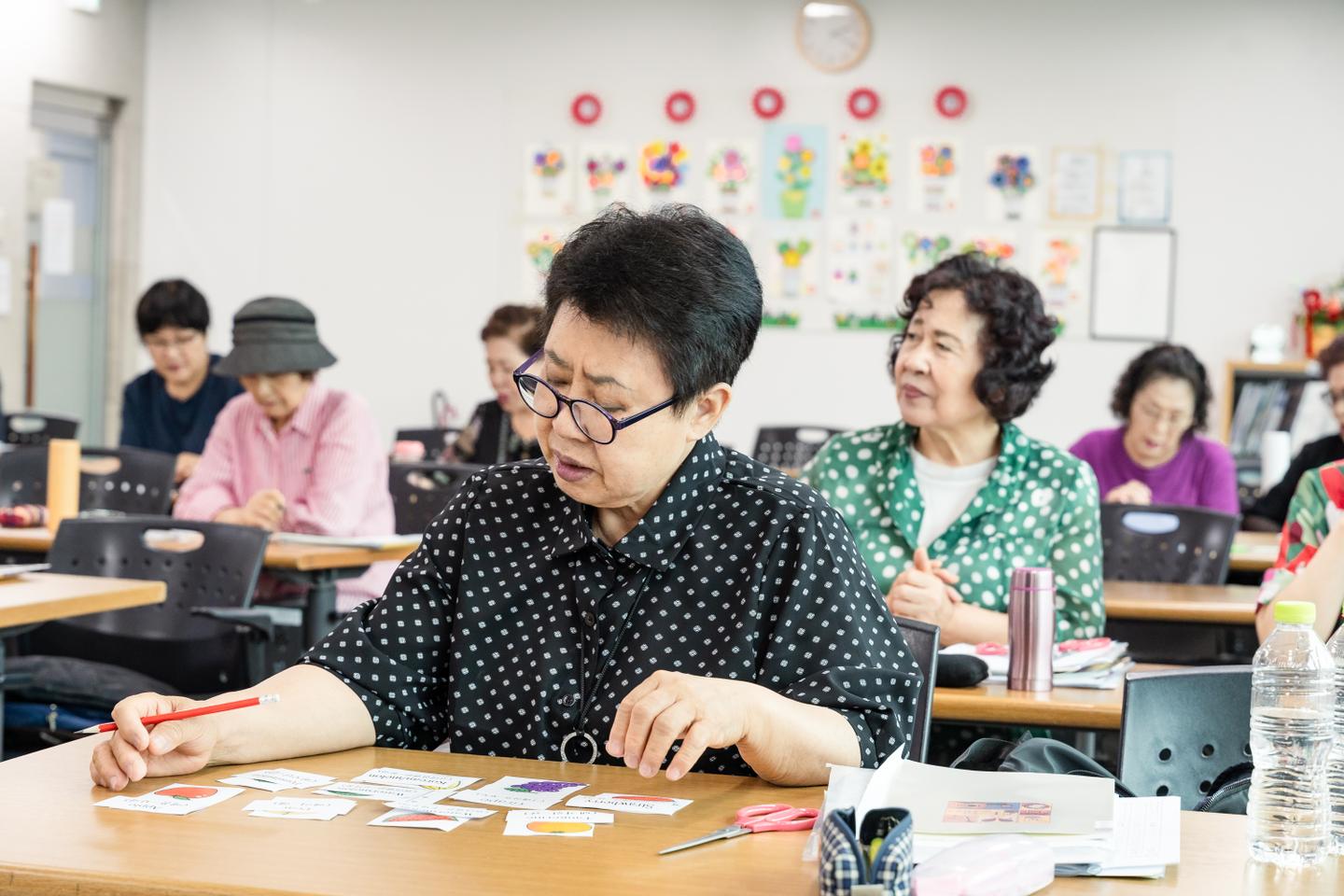
Many South Koreans in their 70s never had the chance to go to school as children. In Seoul, a literacy center gives people aged 70 to 85 the opportunity to catch up on those missed lessons.
Lire en françaisSubscribers only
Yoo Gyeong-sun had to wait until she was 72 to finally learn to read and write. Born in 1952 during the Korean War in Gangwon Province, she was the only one of six siblings who never went to school. "It wasn't because of poverty. My parents were actually financially stable. But my father was convinced girls should stay at home and that the eldest daughter had to look after her brothers and sisters," she said. Encouraged by her daughter, she enrolled in an adult literacy center in the Mapo area of Seoul and, since 2025, has been taking classes equivalent to elementary school level.
Korean society has long been shaped, and to some extent still is, by a patriarchal family structure, inherited from Confucian values (which emphasize a strict family hierarchy, absolute respect for elders, male lineage and a clear division of gender roles). Until its effective abolition in 2008, the hojuje system officially designated the man as head of the family, while a woman was legally subject to triple male authority throughout her life: first her father, then her husband and, eventually, her eldest son. Lee Jeong-yeon experienced this as well. Born in 1941 in the countryside on Geoje Island off the southern coast, in the last years of Japanese colonization, she lived through famine. Her mother insisted she work in the fields, saying girls did not need diplomas to earn money. "Of course, my two older brothers went to school – one made it to middle school and the other to high school. I was so jealous of the boys with their schoolbags," she recalled at 85.
You have 71.54% of this article left to read. The rest is for subscribers only.


