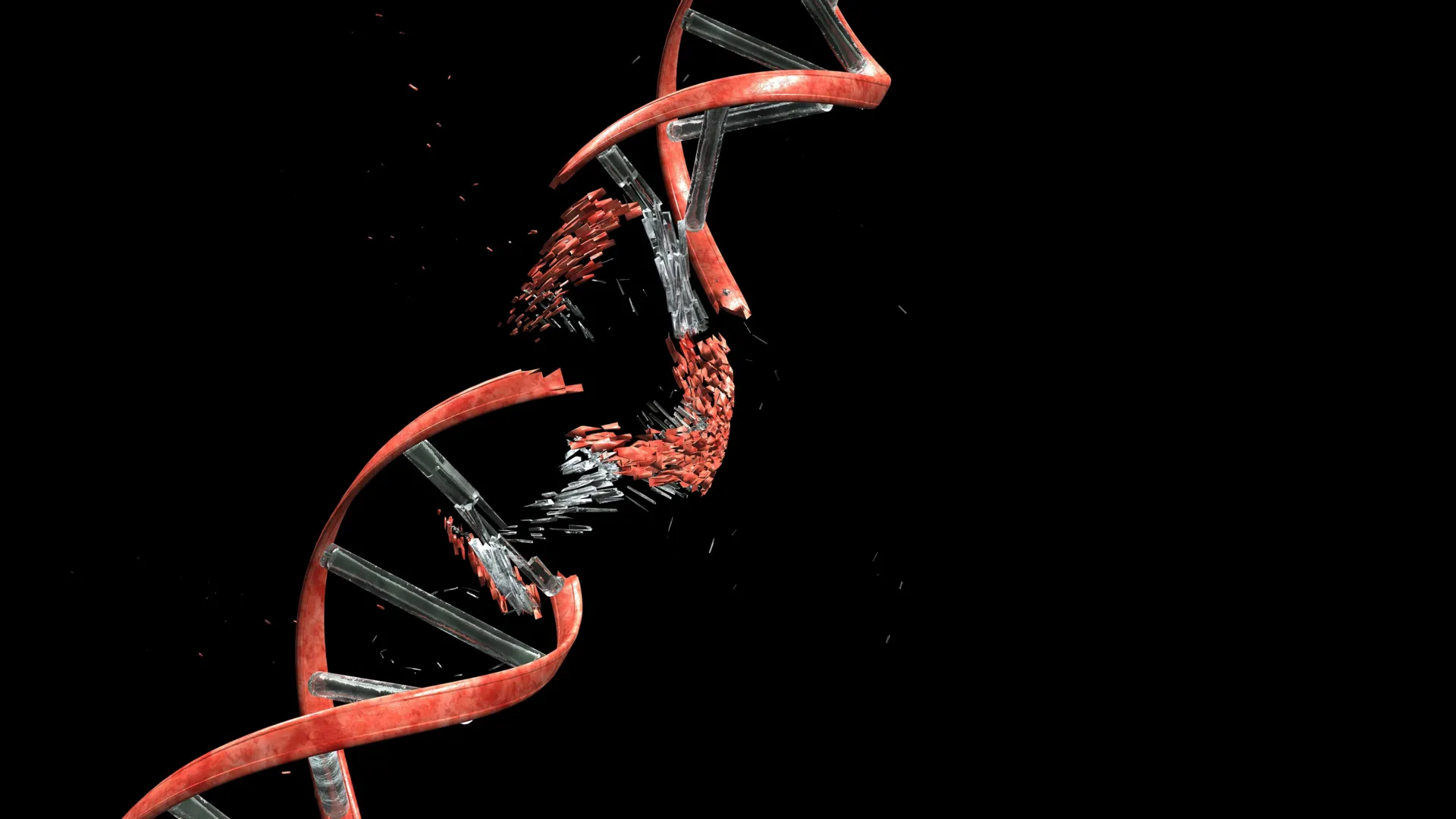
Cancer may be damaging its own genetic material by forcing critical genes to operate at extreme levels. New research suggests that powerful DNA control regions known as super-enhancers drive unusually intense activity in genes that support tumor growth. This relentless activity places strain on the DNA and can lead to serious breaks.
Cancer cells are often able to repair the damage and continue growing. However, repeated cycles of breaking and repair can introduce errors, allowing mutations to accumulate in these highly active regions. The same biological machinery that helps tumors grow rapidly may therefore make their DNA increasingly unstable, potentially enabling cancers to change, adapt, and become more aggressive.
Cancer Growth Places DNA Under Stress
To multiply rapidly, cancer cells activate certain genes far more strongly than healthy cells normally would. Many of these genes help tumors divide, survive, and maintain the cellular programs required for continued growth.
A study published in Science Advances now indicates that this unusually intense gene activity has a physical consequence. As cancer cells push important genes to work at full capacity, the DNA in those regions can become damaged.
The research was led by PhD student Osama Hidmi under the guidance of Prof. Rami Aqeilan of the Hebrew University of Jerusalem. Their findings identify a previously overlooked contributor to genetic instability in cancer cells.
The researchers discovered that DNA breaks often appear in the same locations where cancer cells are driving growth-related genes most aggressively. Their investigation centered on super-enhancers, sections of DNA that function as powerful control panels. These regions strongly increase the activity of nearby genes and help keep cancer-promoting programs operating at very high levels.
Mapping Serious Breaks Across the Cancer Genome
Using a sensitive genome-mapping method, the team created detailed maps showing where double-strand breaks occur. These are among the most severe forms of DNA damage because both strands of the DNA molecule are severed.
The damage did not appear randomly throughout the genome. Instead, the breaks clustered inside genes controlled by super-enhancers. This pattern suggests that forcing certain genes to remain continuously active can place enough pressure on the DNA to cause it to snap.
The researchers also followed a natural cellular "alarm" signal that marks damaged DNA and attracts the machinery needed to repair it. Their results showed that cancer cells repeatedly damage and restore DNA within these intensely active regions.
Repairing these breaks allows tumor cells to survive. Yet every repair creates an opportunity for small errors. Over time, those mistakes may make the affected regions more likely to collect additional mutations.
A Cycle That Could Help Tumors Evolve
"Cancer cells rely on super-enhancers to keep growth genes running at high speed," said Prof. Rami Aqeilan. "What we found is that this same high-output activity can put real strain on the DNA, creating break hotspots that the cell has to repair again and again. That cycle may help tumors survive in the short term, but it also increases the risk of mutations that can fuel cancer's evolution."
The findings suggest that genetic instability may not simply be a side effect of cancer. In some cases, it could emerge directly from the intense gene activity tumors require to keep growing.
As mutations build up, cancer cells can develop new traits. Some of these changes may help tumors spread, withstand stressful conditions, or become less responsive to treatment.
Turning Cancer's Dependence Into a Weakness
"What is especially exciting," added Osama Hidmi, the PhD student who led the study, "Because cancer cells depend on these high-stress DNA regions to keep growing, they may also be more vulnerable there. This opens the door to treatments that target the very processes tumors rely on to survive."
That vulnerability could give researchers a new direction for cancer treatment. Therapies might eventually be designed to disrupt the intense gene activity driven by super-enhancers or prevent tumor cells from repairing the resulting DNA damage.
Because cancer cells depend so heavily on these processes, interfering with them could make it more difficult for tumors to survive and continue evolving.
Why DNA Damage Matters in Cancer
DNA damage and repair play major roles in how cancers grow, change, and resist treatment. The new study offers an explanation for where some of that damage occurs and what may be causing it.
Cancer's strongest gene control regions also appear to be locations of repeated DNA strain. These areas could represent weak points that are especially sensitive to treatments that reduce runaway gene activity or interfere with the repair of broken DNA.
A better understanding of this process may help scientists develop strategies that limit a tumor's ability to adapt. By exposing the connection between rapid growth and genetic instability, the research provides another piece of the puzzle behind cancer's aggressive behavior.
The findings also raise the possibility that one of cancer's greatest strengths may eventually be used against it. The drive to keep growing places constant pressure on the tumor's own DNA, creating damage that could reveal new opportunities for treatment.